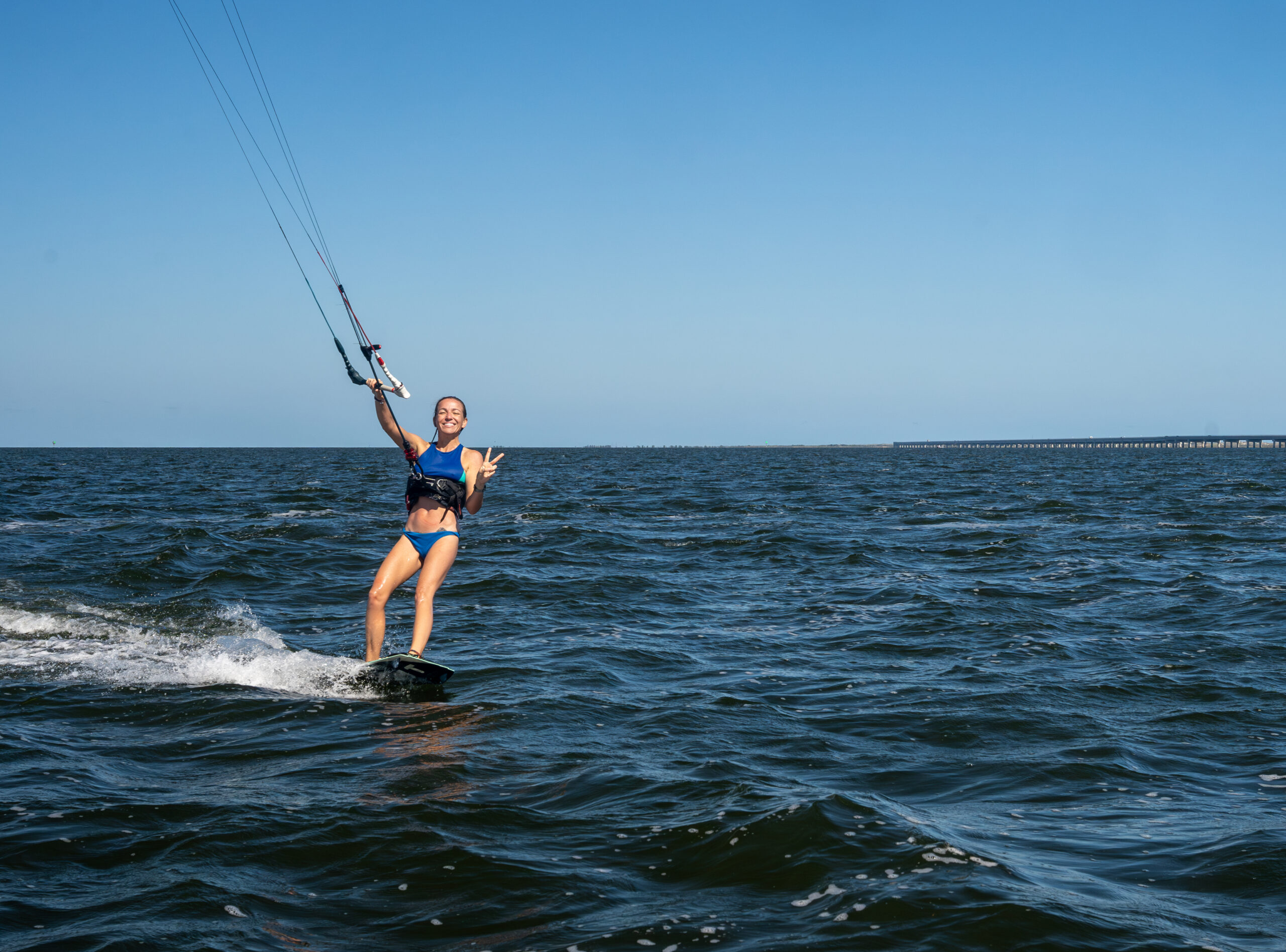
As Women’s History Month comes to a close, conversations around visibility and representation feel especially relevant; not just in traditional spaces, but in places where they are still actively being built. One of those spaces is kiteboarding.
I had the opportunity to talk with Frances “La Fran” Rivera, a Sales Manager for Eleveight in South America, and Stephanie Lacerte, our Kiteboarding School Manager at Kitty Hawk Kites, about their experiences in the sport. And honestly, the conversation kept coming back to the same few things: fear, access, and what it actually takes to see yourself doing something that, for a long time, you might not have seen people like you in.
I saw someone jump 25, 30 feet in the air… and I was like, I want to do that.
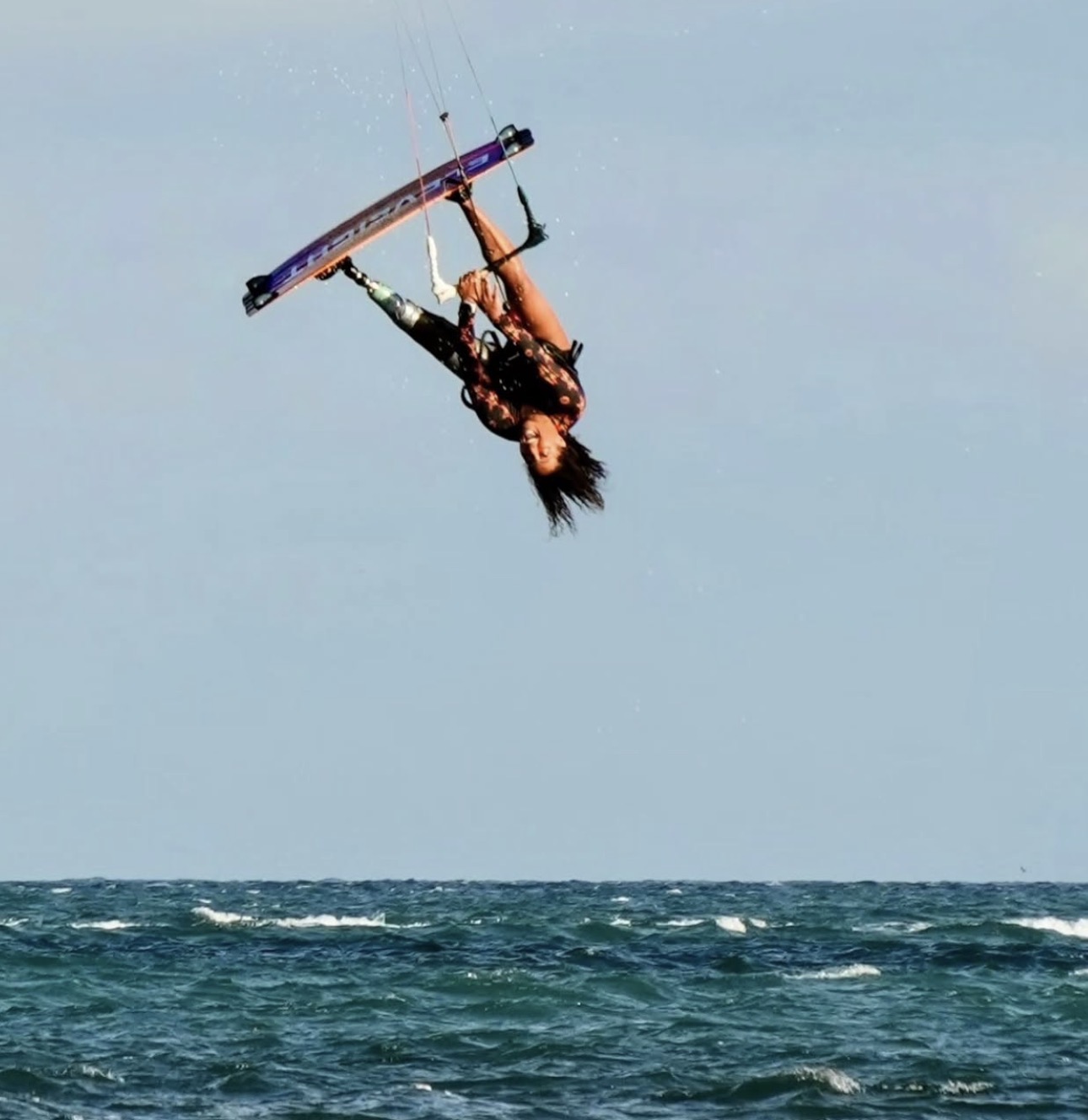
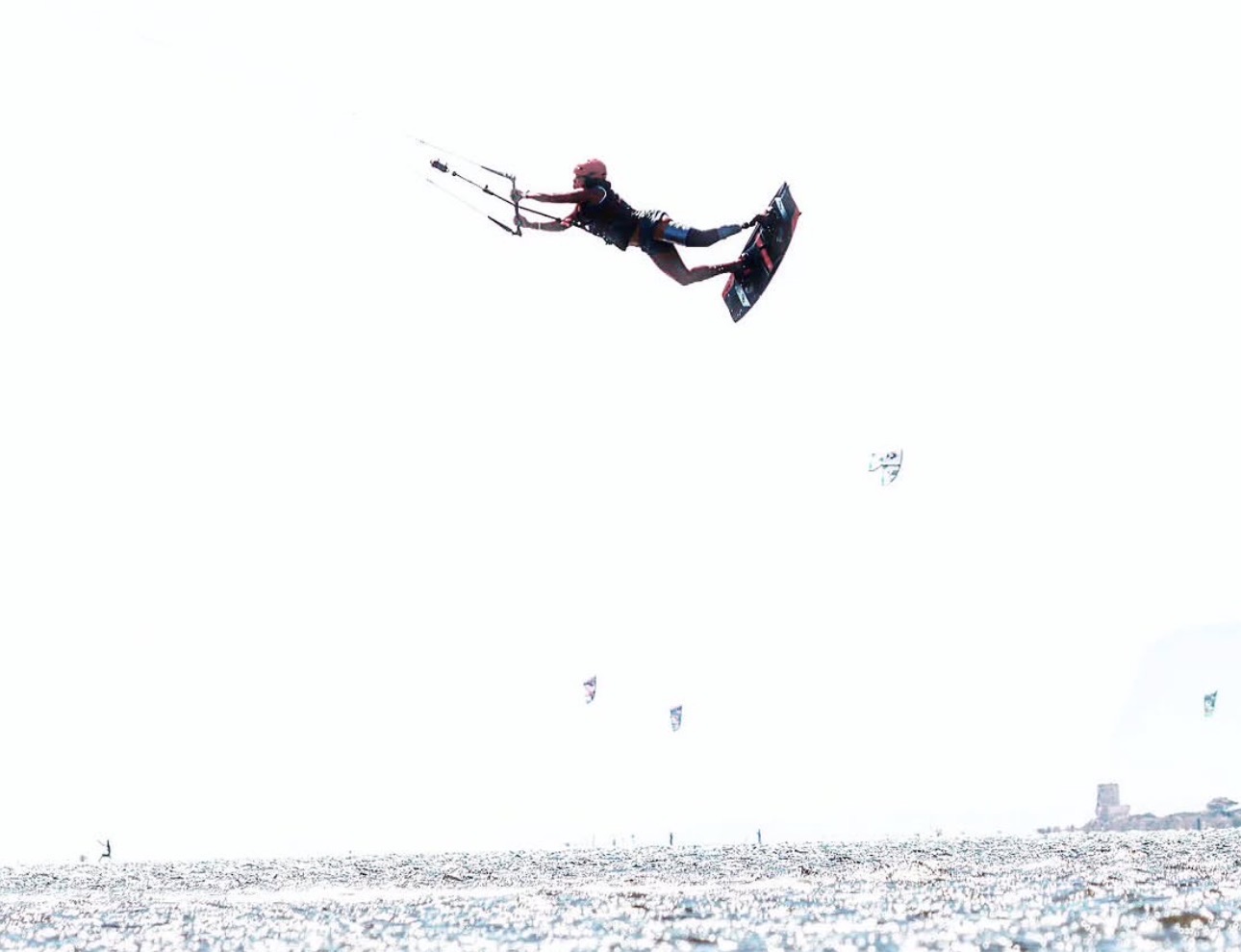
For Fran, getting into kiteboarding wasn’t something she overthought. She talked about being on the beach and seeing someone jump what looked like 25 or 30 feet in the air.
Coming from a skateboarding background, she was already drawn to that kind of adrenaline, but seeing it translated onto the water completely shifted things for her. Even then, her start in the sport wasn’t smooth. After a few hours of lessons, she was mostly just trying to stay up and move downwind. “I was just a skipping stone for like two or three weeks,” she laughed. But somewhere in that chaos, something clicked. She fell in love with it and never stopped.
Steph’s path looked different, but landed in the same place. With a background in surfing and a long-standing curiosity about kiteboarding, she waited for the right moment to fully commit. That moment came when she started working in the kiteboarding department at Kitty Hawk Kites. “Once I got that one ride, I was sold,” she said. “I was like, this is it.”
Two very different entry points, but both rooted in the same instinct: a pull toward something unfamiliar, and the decision to go for it anyway.
Natural Water Women
One thing that stood out was how neither of them framed kiteboarding as something random. It felt more like an extension of something they were already connected to.
Growing up surrounded by water, Fran described her transition into the sport as almost inevitable. “Being on an island, you’re surrounded by water… it was natural to be in the ocean constantly,” she said. That foundation made the shift into surfing and kiteboarding feel seamless.
Steph echoed a similar sentiment. “I was just a water kid,” she said. “You couldn’t get me out of a pool.” The shared connection reframes kiteboarding; it’s not just about the thrill or tricks, it’s about how people interact with water, and the ways that relationship evolves over time.
70% Finesse, 30% Strength. That’s All it Takes.
Despite how it looks from the outside, both Steph and Fran emphasized that kiteboarding is far more accessible than most people assume. “There’s this idea that you have to be really strong,” Steph explained. “But it’s probably 70% finesse and 30% strength.”
That misconception, that the sport requires extreme physical ability, is one of the biggest barriers preventing people from trying it in the first place. In reality, progression comes from understanding the equipment, reading the environment, and building skills over time.
Fran pushed this even further, challenging assumptions around safety. While newer water sports like e-foiling may appear more approachable, she argued that kiteboarding, when learned properly, is often safer.
“If you know what you’re doing, it’s safe,” Steph added. “Just like a car… if you know how to drive it, it’s safe.” The danger isn’t the sport itself, it’s the perception of it. So much of it comes down to knowledge and learning the right way, not just raw ability.
There’s more women now… but it’s still not equal.
When it comes to women in the sport, there’s definitely been progress, but it’s not where it could be yet.
Fran, who has been in the sport since 2007, has witnessed that shift firsthand, from being one of only a few women on the water to seeing a growing global presence of female riders, ambassadors, and industry professionals. But increased visibility hasn’t translated into equality. After more than a decade of competing, Fran shared that the only time she received prize money for placing was recently, despite years of podium finishes in events where male competitors were paid.
Steph sees a similar imbalance at the entry level. While women consistently show up for lessons, they still make up a small percentage overall, hovering around 10%. The result is a space that is evolving, but not yet equitable, where progress and disparity exist side by side.
Visibility creates curiosity
For Fran, visibility goes beyond representation; it directly impacts participation. After being told she shouldn’t pursue kiteboarding following a life-altering injury, she has since seen others in similar situations take up the sport, simply because they saw someone else doing it.
“When people see someone like them doing it, it opens the door,” she explained.
Steph echoed that sentiment, noting how much more attainable something feels when you can see yourself reflected in it. Whether it’s instruction, competition, or work within the industry, visibility transforms kiteboarding from something abstract into something achievable.
Be stubborn and embrace the fear.
For women considering entering the sport, the advice was simple, but not easy. “Be stubborn,” Fran said. “Embrace the fear.” Because fear is kind of unavoidable with something like this. There’s always going to be that moment where it feels easier not to try.
Fear, she explained, is often the very thing that signals growth. It’s the moment where instinct says stop, and choice says go. “Sometimes everything in your body is telling you to turn around,” she said. “And you just have to say, ‘I’m going to do it anyway.’” Because on the other side of that hesitation is often something unexpected: confidence, capability, and a realization that what once felt impossible is actually within reach.
Kiteboarding, in many ways, is a reflection of something larger. It’s not just about wind, water, or technique; it’s about access, visibility, and the willingness to step into something unfamiliar.
Because sometimes, that’s really all it takes to go from watching… to actually trying.
You too can book a kiteboarding lesson through our three-time Gold Winner of Best of OBX Kiteboarding School here.
Written by Caitlin Skapars